
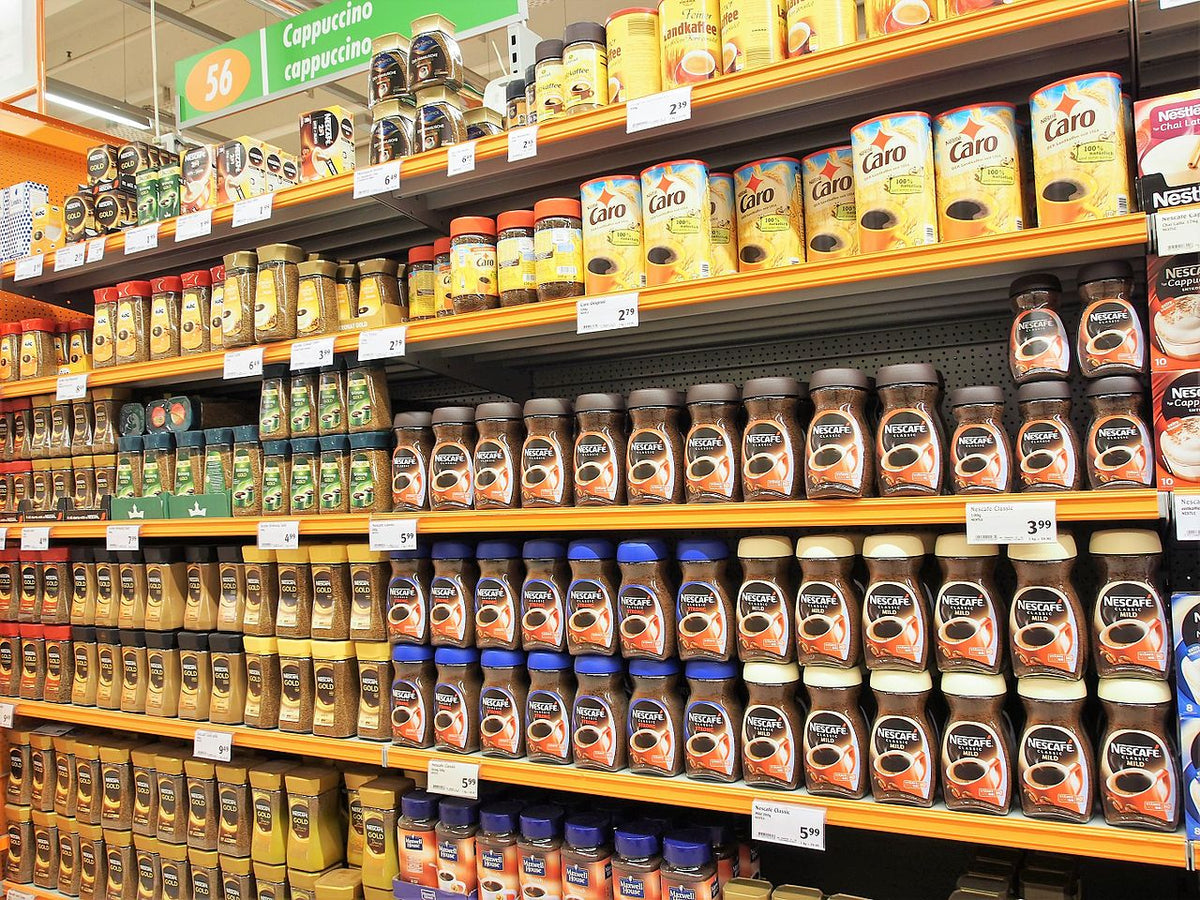
The other day I was wandering the coffee aisle at my local grocery store, scanning the shelves for a bag worth trying. First thing that hits you: the whole aisle smells incredible. That smell is oxidation — oxygen reaching the beans, or in the case of pre-ground coffee, rushing into every crack the grinder just made. It's the smell of coffee actively losing its flavor in real time.
Great smell. Bad sign. By the time those beans make it into your cart, they've usually already lost the freshness that made them worth buying in the first place — and that's before you even get them home.
Here's the part that surprises people: it's not really about the brand on the bag. Oxidation doesn't care whose logo is on the packaging. Take our own beans, ship them to a warehouse, then a distribution center, then a grocery store shelf, and they'd go stale too. From harvest to processing to roasting to sitting on a shelf, weeks pass. Sometimes months. Sometimes — and this is the uncomfortable part — over a year. Every one of those days is a day of flavor draining out of the bag before you've brewed a single cup.
What Oxidation Actually Does to Your Coffee
Here's the part most people don't realize: green, unroasted coffee beans are actually pretty stable. They can sit in transit and storage for weeks without losing much. The clock doesn't start at harvest — it starts the moment beans hit the roaster. Roasting is a chemical transformation that creates everything you actually taste and smell in coffee, and it also makes the beans unstable, reactive, and ready to start losing that flavor almost immediately. Roasted beans begin releasing CO2 and reacting with oxygen right away — the same basic chemistry as a cut apple browning, just slower. Grind them, and that clock speeds up dramatically, since grinding multiplies the surface area exposed to air by roughly a thousand times. That's why fresh-ground coffee smells so much stronger than the bag it came from — you're smelling weeks of flavor leaving the beans all at once.
The Real Timeline: Roast to Shelf
This is the number that actually matters, and it's the one nobody tells you: how long ago was this coffee roasted? Green beans can travel from origin to a roaster without much damage done. But once roasted, a bag of coffee often sits in a warehouse, then a distributor, then a truck, then a store shelf — sometimes for weeks or months — before it's ever bought. Add however long it sits in your own cabinet after that, and you can easily be drinking coffee that was roasted the better part of a year ago. None of that shows up on a "best by" date, which tells you when the coffee expires, not when it was roasted — the one piece of information that would actually tell you what you're getting.
Even Starbucks Didn't Know
One of the reasons we started Sumato is that we got obsessed with a simple question: when was this coffee actually roasted? Grocery stores couldn't tell us. So we tried Starbucks, assuming a company that size would have the answer down to the day. They didn't. I used to walk in and ask the store manager — hi, Omar — about roast dates and get a look like I'd asked him to explain quantum physics. We're friends now, but at the time it was genuinely eye-opening: even the manager of a major Starbucks location had no idea when the coffee behind the counter was actually roasted.
If the people selling you the coffee don't know how fresh it is, there's a good chance you're not drinking it at its best.
The Better Option
Here's the fix, and it's simpler than the supply chain problem makes it sound: buy coffee that tells you exactly when it was roasted, and drink it soon after. We're obviously biased toward Sumato, but honestly — whoever you buy from, ask for the roast date. If a brand can't tell you, that's the answer. As a rule of thumb, aim to drink your coffee within 14 days of roasting; that's roughly the window where the flavor is still close to its peak before oxidation starts noticeably flattening it out.
This is the whole reason roast-to-order subscriptions exist. Instead of coffee sitting in a warehouse waiting for someone to buy it, the beans get roasted after you order. We roast and ship same day, and every bag comes with the actual roast date printed on it — no guessing, no "best by" euphemisms — so what shows up at your door or your desk is only a few days removed from the roaster. Whether you're stocking a home office or an actual office (we built our whole subscription around both — see our office and home office coffee subscription), you pick the roast level, origin, and grind size that fits how you actually drink your coffee.
How to Keep Fresh Coffee Fresh
Getting a fresh bag is only half the job — how you store it matters too. Keep beans in an airtight container, away from direct light and heat (a cabinet, not next to the stove). Skip the fridge and the freezer for your everyday bag; the temperature swings and condensation do more harm than good, and they're really only worth it for beans you won't touch for weeks. And buy in quantities you'll actually drink within two to three weeks — a bigger bag isn't a deal if half of it goes stale before you get to it.
Whole Bean or Ground?
We get this question constantly, and the honest answer is: it depends on how fresh you want your coffee to taste. For maximum flavor, grind your beans within 15 minutes of brewing — that's when oxidation has done the least damage. If you're someone who drowns your coffee in cream and sugar anyway, pre-ground coffee won't hurt you much, since you're not chasing subtle flavor notes in the first place. But if you drink your coffee black, or close to it, whole bean is worth the extra 30 seconds with a grinder.
If you want a place to start, Work From Home, our single-origin Guatemalan, is built exactly for this — solid whether you brew it whole bean at your desk or grind ahead for convenience.
It Comes Down to This
You can get through your morning on stale office coffee, powdered creamer, and whatever sugar packet is left in the drawer. Plenty of people do. But if you're actually going to drink coffee — and most of us drink a lot of it — it's worth spending five extra minutes finding beans that were roasted this month, not last winter.
And if you ever do stumble onto a grocery store bag with a roast date inside that 14-day window? Buy all of it. That's genuinely rare, and you should treat it like the coincidence it is.
Tell Us Your Worst Grocery Store Coffee Story
We know we're not the only ones who've stood in a coffee aisle disappointed. If you've got a grocery-store-coffee horror story — or a "found a fresh bag in the wild" miracle — tag us @sumatocoffee on Instagram or TikTok and tell us about it. We read every one, and the best ones might end up featured right here on the blog.
Mentioned in this article
More stories
How Coffee Blends Flavors are Created
