
Comedian Joe DeRosa wakes up with what he calls the “dread of humanity.”
Before answering messages, solving problems, or pretending to enjoy mornings, he needs coffee. Immediately.
Relatable.
That admission comes during the opening minutes of The Joe Rogan Experience episode #2538 with Joe DeRosa. What follows is an unexpectedly passionate—and very funny—conversation about AeroPress brewers, French presses, electric kettles, expensive espresso machines, unused milk steamers, and how much work a person should reasonably perform before caffeine.
Underneath the jokes, the two Joes arrive at an important question:
Why has making a good cup of coffee become so complicated?
Today’s coffee machines promise café-quality results at the push of a button. Then they arrive with a touchscreen, 17 beverage settings, a milk system nobody wants to clean, and an instruction manual that looks capable of launching a satellite.
At some point, you’re no longer making coffee. You’re managing infrastructure.
Good coffee requires care. It shouldn’t require technical support.
Your Beans Matter More Than Your Buttons
Here’s the uncomfortable truth behind the coffee-machine arms race:
Expensive equipment can’t rescue stale coffee.
You can spend thousands of dollars on a machine, but it cannot restore aromas and flavors that disappeared weeks or months ago. It will simply produce a more expensive cup of stale coffee.
Coffee is an agricultural product, and its freshness matters. After roasting, its most interesting aromatic qualities gradually begin to fade.
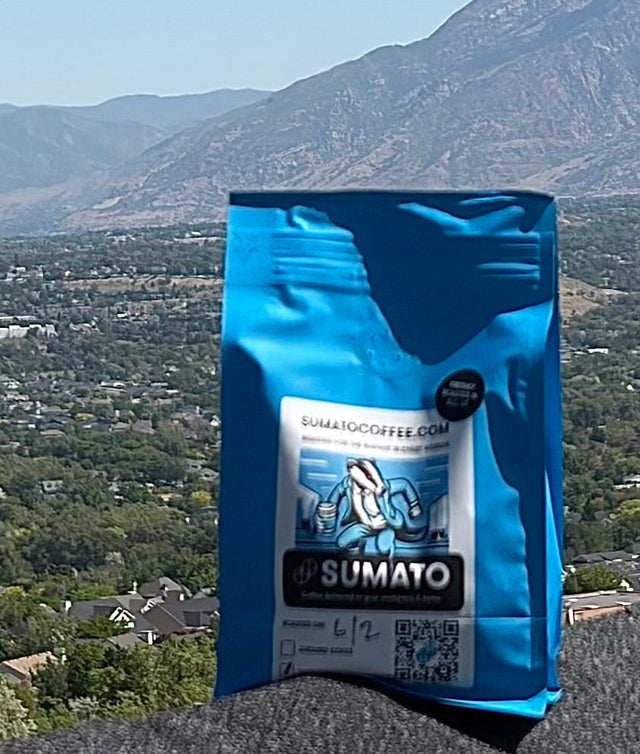
That’s why Sumato roasts coffee to order and puts the roast date directly on every bag. Not a vague “best by” date. The actual date the coffee was roasted.
Knowing the roast date tells you something meaningful about what you’re drinking. It also prevents a shiny machine from getting credit for work the beans are supposed to do.
Simple Coffee Can Be Seriously Good
During the podcast, Rogan makes the case for straightforward brewing methods such as the AeroPress and French press. His reasoning is practical: fewer parts, an uncomplicated process, and a cup that tastes clean and fresh.
That basic philosophy is right.
A simple setup gives you control over the things that actually affect flavor:
-
Freshly roasted coffee
-
The right grind size
-
A consistent coffee-to-water ratio
-
Good water
-
Proper water temperature
-
Enough brewing time
You don’t need to become a coffee scientist. You need a repeatable routine.
A French press, for example, has very little to break. Add coarse-ground coffee, pour in hot water, wait approximately four minutes, and press.
That’s it.
No software update. No error code. No milk tube containing evidence from last Tuesday.
Because a French press uses a metal filter, more of the coffee’s natural oils remain in the cup. That creates the rich, full-bodied result many coffee drinkers enjoy.
For a bold French press, try The Rise & Grinder Dark Roast. Its dark chocolate character, full body, and smooth finish are particularly well suited to this brewing method.
An AeroPress is another approachable option, especially if you want one quick cup. It’s portable, easy to clean, and forgiving enough for daily use.
Neither method is automatically “the best.” The best coffee brewing method is the one that produces coffee you enjoy without creating a morning routine you resent.
Convenience Isn’t the Enemy
DeRosa makes a fair point in the episode: sometimes you want to wake up and find a full pot of coffee already waiting.
That isn’t laziness. It’s planning.
There’s nothing wrong with an automatic drip brewer—particularly in a workplace or home where multiple people drink coffee. Convenience becomes a problem only when it comes at the expense of freshness, cleanliness, or flavor.
A basic automatic brewer can make excellent coffee when you give it fresh beans, an appropriate grind, clean equipment, and a consistent coffee-to-water ratio.
A useful starting point is approximately 60 grams of coffee for each liter of water. If you don’t own a scale, use your normal scoop consistently and adjust according to taste.
The goal is better coffee, not a mathematics exam.
Don’t Forget the Grinder
If you want to upgrade your coffee without buying an appliance that needs its own onboarding meeting, consider a burr grinder.
Grinding immediately before brewing helps preserve your coffee’s aromas and flavors. Once coffee is ground, more of it is exposed to oxygen, and it begins losing freshness faster.
A burr grinder also creates more consistent grounds than a basic blade grinder. That consistency helps the water extract flavor more evenly.
Use a coarse grind for French press and a medium grind for most automatic drip brewers. AeroPress recipes vary, but a medium-fine grind is a good place to begin.
If your coffee tastes weak or sour, try grinding slightly finer. If it tastes harsh, dry, or bitter, try grinding slightly coarser.
Congratulations. You are now more useful than most coffee-machine troubleshooting guides.
Office Coffee Is Where Simplicity Really Matters
Complicated equipment becomes especially problematic in the workplace.
At home, one person may understand the machine. At work, 12 people use it, three people insist they don’t know how to clean it, and someone has been pressing the same warning button for six months.
A good office coffee setup should be easy to brew, easy to maintain, and stocked with coffee people genuinely want to drink.
Office coffee isn’t a minor detail. It’s part of the employee experience.
People gather around it. Meetings begin with it. New employees are introduced over it. Difficult mornings become slightly more manageable because of it.
Your company may have invested heavily in workplace culture. If the coffee tastes like it was roasted during the previous fiscal year, people will notice the contradiction.
A Simple Formula for Better Coffee
If your current coffee routine feels unnecessarily complicated, start here:
-
Buy freshly roasted coffee. Look for a real roast date, not only a distant expiration date.
-
Grind close to brewing. Whole beans retain their flavor longer.
-
Choose equipment you’ll actually use. French press, AeroPress, pour-over, and automatic drip can all make excellent coffee.
-
Keep everything clean. Old coffee oils can make even fresh beans taste bitter.
-
Change one variable at a time. Adjust the grind, ratio, or brewing time—then taste again.
-
Drink what you enjoy. Black, with milk, light roast, or dark roast: the right cup is the one you want another sip of.
For a lighter, bright cup that works with AeroPress, pour-over, drip, or French press, try Work From Home Single-Origin Guatemalan. It combines fruit-forward flavor with smooth chocolate undertones—ideal for answering emails while dressed professionally from the waist up.
Your Morning Already Has Enough Moving Parts
Great coffee doesn’t require the most expensive machine in the room.
It requires fresh beans, a sensible brewing method, and enough attention to get the important details right.
Whether you prefer the ritual of a French press, the speed of an AeroPress, or an automatic pot waiting when you wake up, the objective is the same:
Make coffee you look forward to drinking.
At Sumato Coffee, we roast to order and put the roast date directly on every bag. Because your morning already has enough moving parts.
Your coffee doesn’t need more.
This article was inspired by the opening coffee conversation in The Joe Rogan Experience #2538 with Joe DeRosa. Sumato Coffee is not affiliated with or endorsed by the podcast, Joe Rogan, or Joe DeRosa.
Find similar articles:
aeropress brewing guides coffee equipment french press Freshness & Roasting Salt Lake City types of coffee drinkersMentioned in this article
More stories