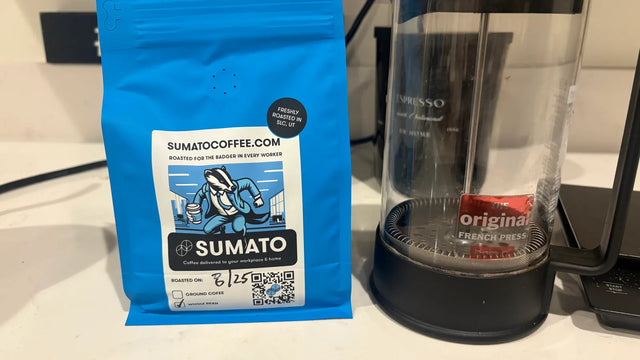
There's a version of "getting to the top" that involves stock options and a corner office, and there's a version that involves volcanic soil and thin air at 6,000 feet. Only one of those reliably produces something good every morning. This post is about the second one — and about why the coffee in your cup owes more to elevation than most people realize, twice over.
Grown high, tastes different
Coffee doesn't grow just anywhere. The good stuff — the kind with actual flavor instead of just "brown and hot" — tends to come from high up, usually somewhere between 4,000 and 7,000 feet above sea level, on mountainsides in places like Ethiopia, Guatemala, and Costa Rica.
Altitude does something specific to the plant: the air is thinner and cooler, so the coffee cherries mature more slowly than they would at lower, warmer elevations. That slower ripening gives the bean more time to develop sugars and density before it's picked. Denser beans generally mean more complex, more distinct flavor once roasted — brighter acidity, more defined notes, less of that flat, muddy sameness you get from coffee grown fast and cheap at low elevation.
It's a big part of why The Founder, our Ethiopian light roast, tastes like berries and florals instead of just "coffee-flavored coffee" — Ethiopia's highland regions sit high enough that the plant is working for it. If you want the deeper dive on why growing a coffee from one specific place (instead of blending several) changes the cup, we covered that in What Is Single Origin Coffee? Same altitude logic applies to the Guatemalan beans behind Work From Home and Touch Base.
The Sender is the clearest example we can point to directly, because we know exactly where that coffee comes from: Hacienda Doka, an estate on the slopes of the Poás volcano in Costa Rica, sitting at around 4,500 feet. The Vargas family has been growing coffee there for generations, in soil that's volcanic in the literal sense — Poás is an active volcano, and that mineral-rich ground is a big reason the beans come out clean and balanced instead of sharp or muddy. Doka still runs the country's oldest working wet mill, a century-old water-powered setup the Costa Rican government has since designated a historic site — which tells you something about how long they've been doing this well.

(A personal note from Ben: I visited Doka about six years ago, and it's one of those trips that's stuck with me since — genuinely hoping to get back sometime soon.)
Roasted at altitude too
Here's the part most people don't think about: altitude doesn't stop mattering once the beans leave the farm. It matters again at roasting.
Salt Lake City sits at over 4,200 feet above sea level — genuinely high enough that it changes how roasting works, and a big part of why we've talked before about why Salt Lake City is becoming a specialty coffee town. Thinner air holds less oxygen and transfers heat differently than air at sea level, which means a roast that's dialed in for a coastal city doesn't behave the same way here. Getting a roast right at this elevation takes real adjustment, not just running the same settings and hoping for the best.
So the coffee in your bag was grown at altitude, then roasted at altitude — fresh, right here in Salt Lake City, not shipped in from some sea-level facility running one generic profile for the whole country. Two different mountains, same standard: don't let easy conditions make the coffee worse.
Funny enough, for The Sender specifically, those two mountains are almost the same height — Hacienda Doka sits around 4,500 feet up on the Poás volcano, and Salt Lake City sits over 4,200 feet up in the Wasatch valley. That bean barely notices the trip.
Why it actually shows up in the cup
None of this is trivia for the sake of trivia — it's the reason the roasts taste like what they claim to taste like (and if you want the full breakdown of what light, medium, and dark actually change, we've covered that separately):
The Founder (Ethiopian, light roast) — grown in Ethiopia's high-altitude birthplace-of-coffee regions, which is exactly where those berry and floral notes come from.
Work From Home (Guatemalan, light roast) and Touch Base (Colombian/Guatemalan blend) — Guatemalan highland-grown beans, giving that fruit-forward, chocolatey character instead of something flatter.
Culture Hire — a blend that includes natural-process Ethiopian beans, which is where the blackberry notes come from; natural processing lets the cherry ferment on the bean longer, adding fruit-forward intensity on top of what altitude already gives it. (More on how blends like this come together in How Coffee Blends Flavors Are Created.)
The Sender (Costa Rican, medium roast) — grown at Hacienda Doka on the Poás volcano, around 4,500 feet up in genuinely volcanic soil, which is exactly why it comes out clean and balanced instead of sharp or muddy.
If you've ever wondered why a $9 grocery store bag and a well-sourced light roast can taste like two completely different beverages despite technically being the same plant — this is a big piece of the answer. It's not marketing. It's elevation, twice.
The takeaway
You don't need to memorize elevation numbers to enjoy your coffee — that's our job, not yours. But next time someone tells you coffee is coffee, you'll have a genuinely good answer for why it isn't. Grown high, roasted high, and made for people who'd rather spend thirty seconds appreciating a good cup than another fifteen minutes in a meeting that could've been an email.
Ready to taste the difference elevation makes? Start with The Founder, The Sender, or grab The Coffee Collection to try a few side by side.
What's your go-to roast — light and bright, or something deeper? Let us know in the comments.
Mentioned in this article
More stories